
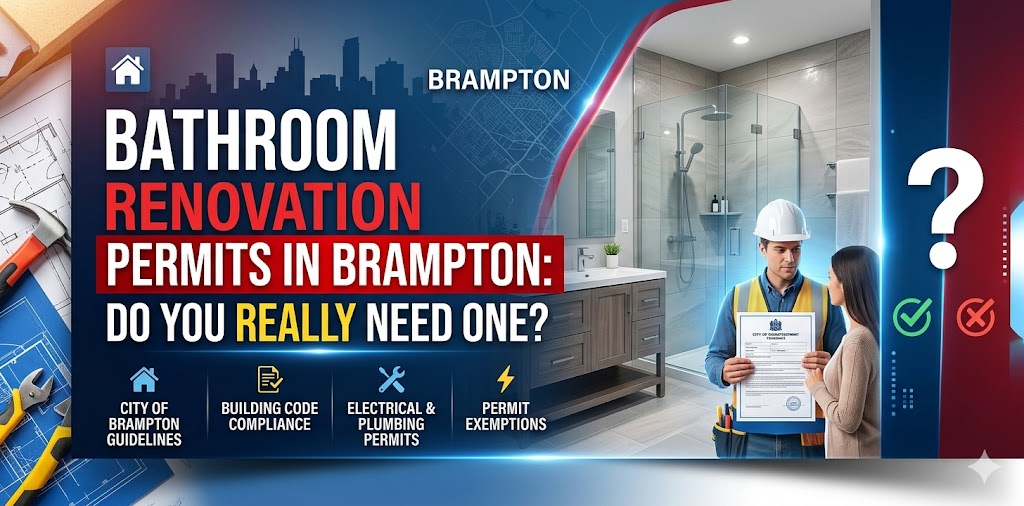
Planning a bathroom renovation sounds exciting at first. New tiles, better lighting, maybe a modern shower. But then this question pops up and slows everything down… do you actually need a permit?
If you’re in Brampton, the answer isn’t always a simple yes or no. It depends on what exactly you’re changing.
I’ve seen homeowners skip permits thinking it saves time. Sometimes it works out. Other times, it creates bigger headaches later, especially during resale or inspections.
So let’s break it down in a way that actually makes sense.
When You DON’T Need a Permit
Not every bathroom upgrade requires paperwork.
If your renovation is mostly cosmetic, you’re usually fine without a permit.
This includes:
- Replacing tiles
- Installing new cabinets or vanity
- Painting walls
- Changing fixtures like faucets or showerheads
Basically, if you’re not touching plumbing lines, electrical systems, or structure, you’re in the clear.
These are straightforward upgrades. No inspections needed.
When You DO Need a Permit in Brampton
This is where things change.
The moment your renovation goes beyond surface-level work, permits start to matter.
You’ll likely need one if you are:
- Moving plumbing lines (toilet, sink, shower)
- Installing new drainage systems
- Upgrading electrical wiring
- Adding new lighting circuits
- Changing walls or layout
Even small layout changes can trigger permit requirements.
For example, shifting a toilet a few feet might seem minor, but it involves plumbing changes behind the walls. That’s regulated work.
Why Permits Actually Matter
A lot of people think permits are just paperwork and delays.
But there’s a real purpose behind them.
Permits ensure:
- Work meets building codes
- Electrical and plumbing systems are safe
- Your home structure stays intact
Without permits, there’s no official inspection. And that means no guarantee the work was done properly.
I’ve seen cases where improper wiring caused issues months later. Fixing that costs way more than getting a permit in the first place.
The Resale Problem Most People Ignore
Here’s something homeowners don’t think about at the start.
If you renovate without permits and decide to sell later, it can come back to bite you.
Buyers (or their inspectors) might ask:
- Were permits pulled?
- Was the work inspected?
If the answer is no, it raises concerns.
In some cases, you may need to:
- Redo the work
- Get retroactive permits
- Lower your asking price
It turns into a problem you didn’t plan for.
How the Permit Process Works in Brampton
It’s not as complicated as people expect.
Usually, the process looks like this:
- Submit renovation details (drawings, scope of work)
- Wait for review and approval
- Start work once approved
- Schedule inspections at key stages
The timeline depends on the complexity of your project.
Simple updates move faster. Structural or plumbing-heavy renovations take longer.
A good contractor usually handles this for you, which honestly makes things much easier.
Working With a Professional Makes a Difference
This is where hiring experienced renovators like Paradise Renovation helps.
Instead of guessing what needs a permit, they already know.
They’ll:
- Tell you upfront if permits are required
- Handle the application process
- Ensure everything meets local codes
That removes a lot of stress.
DIY projects often run into issues because homeowners aren’t fully aware of local requirements.
Common Mistakes Homeowners Make
I’ve noticed a few patterns over time.
People often:
- Assume small changes don’t need permits
- Rely on verbal advice instead of checking rules
- Hire cheap contractors who skip permits
That last one is risky.
If a contractor suggests avoiding permits to save money, it’s usually not a good sign.
You might save a bit upfront, but the long-term cost can be much higher.
So, Do You Really Need a Permit?
Here’s the simplest way to look at it.
If your renovation is purely visual, no permit.
If it involves plumbing, electrical, or structural changes, you probably need one.
When in doubt, it’s always safer to check.
Because fixing permit issues later is way harder than doing it right from the start.
Final Thoughts
Bathroom renovations in Brampton can be smooth or stressful. A lot depends on how you handle permits.
It’s not about overcomplicating things. It’s about protecting your home, your investment, and your future plans.
Skipping permits might seem like a shortcut, but it rarely stays simple for long.
If you’re planning a renovation, take a few extra steps upfront. It saves you from bigger problems later.